Wednesday, July 29, 2009

Schumacher to return to Ferrari F1 for remainder of season

Michael Schumacher

Yesterday's rumors have been confirmed: Michael Schumacher will take Felipe Massa's place for the remainder of the 2009 Formula One season.

A Ferrari spokesperson said Schumi's return hinges on the seven-time F1 champion's ability to pass the FIA's physical (we doubt that'll be a problem) and he'll be back in full-force on August 23 at the European Grand Prix in Valencia.

Schumacher has been under the employ of Ferrari as an advisor to the team since his retirement in 2006, and although Massa is reportedly well on his way to recovering after sustaining a serious head injury at last weekend's race, Schumacher will take his place for the remaining seven races of the 2009 season.

[Source: BBC Sport]

Electric Toyota iQ to get bespoke body

Electric Toyota iQ

Earlier this year at the Detroit Auto Show, Toyota surprised the audience by showing off a fully electric version of its diminutive iQ city car called the FT-EV. According to Autocar, a production version of the EV should be on the market by 2010, which, if true, would be an impressive feat indeed. We're not sure how these plans to along with Bill Reinert's assertion that electric cars "just aren't plausible right now," but we're happy to see EV technology progressing at the automaker regardless.

Hiroki Nakajima, chief engineer for the iQ, tells the British motoring mag that the electric iQ – known internally as BEV (Battery Electric Vehicle) – will not share sheet metal with its gas-powered sibling. "We wanted to position the iQ as premium," he said, "but not so the BEV." That being the case, expect the Goldmember-style accents from the concept to be dropped in production form.

Following successful tests of the technology in its plug-in Prius fleet, the BEV will be the first production application of lithium ion batteries in a Toyota and the target range is 93 miles (150km). Charging time is quoted at eight hours, but that's surely dependent on the specific outlet serving up the charge. Power will come from one electric motor per wheel, potentially making this an all-wheel drive electric vehicle.

[Source: Autocar]

Tuesday, July 28, 2009

Review: 2010 Bentley GTC

2010 Bentley GTC

The Bentley Continental GT has been lauded and derided for being too much: too powerful, too fast, too easy, too big, too ubiquitous, and yes, too good. The convertible version, the Continental GTC, dismissed its roof but retained the excess. Now, Bentley has worked its "Speed" hocus-pocus in order to create a new variant of everyone's favorite over-the-top drop-top and Crewe's mad scientists have taken a vehicle that's already cranked to eleven and turned it up a notch or two... or three.

Doing anything to make the GTC a more engaging or – dare we say – a better vehicle, is like getting a letter from the man above telling you that Heaven is now 43% improved. Angels have bigger wings and more melodious songs, and the flowing milk and honey is now organic. What do you do with that? In the case of the GTC Speed, we felt it our duty to drive it as hard as possible – a job we're all too happy to tackle. But like that better heaven, the experience is difficult to relate.


No singular element of the hotted-up GTC is magical. Instead, it's about creating a comprehensively improved package. The Speed versions aren't merely badge jobs, they're the culmination of a methodical, holistic approach to advancement. And stylistically, the alterations are subtle – or as subtle as anything with a flying "B" can be. Some would say Bentley's Speed lineup doesn't distinguish itself enough from its non-Speed siblings, but a closer inspection reveals the details are obvious, assuming you know what to look for.

The grille is more upright and square, the lower intake is reshaped, and the mesh benefits from a slightly darker tint. If you absolutely need a chrome grille, it's yours as a no-cost option and the chrome bezels surrounding the headlamps tie it together. In back, you'll find a new rear spoiler that rises to attention during high-speed maneuvers, and below that are wider, twin-rifled exhaust tips and a black lower bumper valance. The only obvious indication that you optioned up your GTC to the hilt comes on the sill plates, which simply read "Speed." Otherwise, there's that delicious three-spoke steering wheel, drilled alloy pedals, and knurled chrome and leather shift lever.


Beneath the aesthetic details, the car has been reengineered. In fact, some of those aesthetic details assist the engineering: the revised front grille improves airflow by 14% to the 6.0-liter, twin-turbocharged W12. The engine, which is under new management, spins more freely thanks to lower friction, lighter-weight components that includes a new crankcase design, camshaft chain, pistons and connecting rods, all of which are covered with a manifold finished in crackle black.

The GTC Speed also hunkers lower by 10 mm in front and 15 mm in back on a redesigned suspension. Specific settings for the springs, dampers, and anti-roll bar were reworked for around-town comfort, and the Continuous Damping Control works to minimize the rolling of that prodigious body. The power steering has been tuned for better feedback (it's still a bit too light for our Rolex-free wrists), and actual response is meant to be enhanced by stiffer rear axle bushings.

Since the point of having more is to be able to do more with it, the GTC Speed's electronic stability program intervenes progressively, and permits more wheelspin when set on Dynamic.


Beyond the standard engineering flourishes are optional touches that, naturally, are both over-the-top and over-the-top expensive. The optional carbon ceramic brakes measure in at 16.5-inches in front, 14-inches out back. The front brakes are an inch larger than those on the Bugatti Veyron, making them the largest discs you can get on a production car. Bentley will tack on another $17,840 to the bill as larger wheels and tires are required to accommodate the upgraded stoppers. Adaptive cruise control is $3,040. A satin paint finish in light or dark gray is $32,360. And the list goes on and on...

But money isn't your concern if you're shopping for a GTC Speed. Luxury is. The Speed gets the Mulliner spec with its diamond-quilted hides, and those massaging seats feel so good that cows likely stood in line to offer up their hides. Bentley's in-dash control system is slowly creeping up on modernity, with fully-integrated iPod and Bluetooth connectivity (at a cost, mind you), but it's still not something we enjoy fiddling with. The aurally concussive, 1,100-watt Naim audio system can be heard from the mesosphere, but be forewarned: Put the wrong track on at the wrong volume, and you'll discover that the volume knob is the gatekey to blown eardrums and rattle nerves.


But obviously, the GTC Speed is more than just a faultless operating theater, a few cosmetic tweaks and a rejiggered suspension. This is a 600-horsepower convertible with 553 lb-ft of torque, capable of running to 60 mph in 4.5 seconds and on to a top speed of 200 mph with the roof up or 195 mph topless. It's the most powerful convertible Bentley has ever made, which is like NASA saying "This is the most powerful Space Shuttle we've ever made. And new for this year, you can have it in Aquamarine or Blue Crystal." But you wouldn't...

Bentley describes the GTC Speed's handling as "agile." And it is. But how the crew from Crewe manipulated the GTC's composure is compelling. Weighing in at 5,478 pounds, the Speed is just 200 pounds shy of a Toyota Landcruiser and just five inches shorter than ToMoCo's off-road titan. In order to create some semblance of handling, we can only assume Bentley kidnapped the muse Agility, strong-armed her into the car, put a well-oiled Walther PPK to her temple and said, "You'll give me everything you've got!" The result is a vehicle that's agile, but it overcomes every natural force in the world to do so.

Massive speed is a blink away. Massive braking, when the ceramic stoppers are cold, comes on even a bit too soon - herky jerky is on the menu until you've worked them in. Once they've had time to warm up and stretch out, the pedal loosens and the GTC delivers clean, linear decelerations.


Assault a corner – and it is an assault – and the GTC Speed responds like the finest English butler: everything is put on hold, including physics and maybe even reason, so it can fulfill your orders. It doesn't care that it's too big, too heavy or too plush to perform the desired maneuver. And frankly, it doesn't care that your requests could border on the immoral. This is what you have asked. And it will deliver... sir. Can you go too far? Of course. But the penalty is a mild case of understeer, and you do have the largest brakes in the world and a tsunami of torque to bring you back. And if you go too far for even that – and that's a terribly long way off – well, we wish you the best in the afterlife... but you probably deserved it.

The GTC Speed has been described as being made for "customers who demand a more focused, open-top driving experience." But let's put "more focus" in perspective: The GTC delivers even more power and poise, physics be damned. It's just as roomy, but its leather isn't diamond-stitched unless you pay extra. The GTC has new, low-friction dampers, but not the suite of engineering changes found on the GTC Speed. But as we said before: the GTC is already ludicrously, impossibly, bafflingly able.


The GTC is phenomenal. Yes, the GTC Speed is more phenomenal, but in the difference between the GTC and the GTC Speed, we're really talking slivers here. They just happen, however, to be slivers of heaven. Fittingly, that sliver will run you nearly $40,000 – the GTC Speed starts at $237,695 – but living a nasty, short, and brutish life in a cruel, cruel world, every little extra bit of heaven counts, no?

[Source: Autoblog]

Officially Official: Ferrari 458 Italia announced!

Ferrari 458 Italia
Ferrari 458 Italia
Ferrari 458 Italia
Ferrari 458 Italia
Ferrari 458 Italia

After months of speculation and spy shots, Maranello has finally revealed the mid-engined V8 replacement for the Ferrari F430. The all-new Ferrari 458 Italia won't be shown in public until September's Frankfurt Motor Show, but the official details were released early this morning. A new direct-injected 4.5-liter V8 ups the ante underhood, pumping out 562 horsepower and 398 lb-ft of torque. The redline? A screaming 9,000 rpm. Eighty percent of the F458 Italia's torque is now available at a low 3,250 rpm, thanks in all likelihood to the new engine's 12.5:1 compression ratio.

As with last year's California, the Ferrari 458 gets a seven-speed dual clutch gearbox that directs power to the rear axle. Much has been done to reduce internal friction within the new V8, in addition aerodynamic drag improvements. As a result, the Ferrari 458 Italia's gas mileage improves to a combined 17.1 mpg (US) on the EU test cycle. As this is a Ferrari, talk of fuel consumption really does seem somewhat pointless, anyway. No mention of incorporating any type of KERS hybrid system has been made thus far. The KERS idea, you'll remember, had taken several spins around the rumormill over the last year or so; maybe that'll materialize at a later date.

Like its predecessor, the Ferrari 458 Italia's aluminum structure helps keep weight under control -- it tips the scales at just 3,042 pounds dry. So, we know you're wondering: How quick is it? Based on specs at least, this new coupe does't disappoint. Acceleration to 100 km/h (62 mph) takes just 3.4 seconds, and this will be the first volume production Ferrari V8 to top the 200 mph barrier, with a top whack of 202 mph. Is it still too early to head to the airport for our flight to Frankfurt in September?

[Source: Ferrari]

ITALIA - Ferrari's innovative new V8

The 458 Italia is the latest incarnation of the mid-rear engined berlinetta and will be unveiled at the next Frankfurt Motor Show

Maranello, July 28th 2009 – While it's true that every Ferrari is innovative by definition, it's equally true that in the course of the Prancing Horse's history, certain cars have marked a genuine departure from the current range. This is very much the case with the Ferrari 458 Italia, which is a massive leap forward from the company's previous mid-rear engined sports cars.

The new model is a synthesis of style, creative flair, passion and cutting-edge technology, characteristics for which Italy as a nation is well-known. For this reason Ferrari chose to add the name of its homeland to the traditional figure representing the displacement and number of cylinders.

The Ferrari 458 Italia is a completely new car from every point of view: engine, design, aerodynamics, handling, instrumentation and ergonomics, just to name a few.

A two-seater berlinetta, the Ferrari 458 Italia, as is now traditional for all Ferrari's road-going cars, benefits hugely from the company's Formula 1 experience. This is particularly evident in the speed and precision with which the car responds to driver inputs and in the attention focused on reducing internal friction in the engine for lower fuel consumption than the F430, despite the fact that both overall displacement and power have increased. However, Ferrari's track experience makes its presence felt in the 458 Italia not only in terms of pure technological transfer but also on a more emotional level, because of the strong emphasis on creating an almost symbiotic relationship between driver and car. The 458 Italia features an innovative driving environment with a new kind of steering wheel and dashboard that is the direct result of racing practice. Once again input from Michael Schumacher - who was involved from the very start of the 458 Italia project - played an invaluable part.

The Ferrari 458 Italia's Pininfarina design provides further evidence of the complete departure from the past that this new car hails. The Ferrari 458 Italia has a compact, aerodynamic shape, underscoring the concepts of simplicity, efficiency and lightness that inspired the project. As with every Ferrari, the car's styling has been very heavily influenced by the requirements for aerodynamic efficiency, as can be seen from the downforce of 140 kg at 200km/h generated by the new model. The front features a single opening for the front grille and side air intakes, with aerodynamic sections and profiles designed to direct air to the coolant radiators and the new flat underbody. The nose also sports small aeroelastic winglets which generate downforce and, as speed rises, deform to reduce the section of the radiator inlets and cut drag.

The new 4499 cc V8 is the first Ferrari direct injection engine to be mid-rear mounted. It has a very low piston compression height typical of racing engines which contributed to achieving its compression ratio of 12.5:1. Equipped with the traditional flat-plane crankshaft, the engine delivers 570 CV at 9000 rpm and, with an outstanding power output of 127 CV/litre, sets a new benchmark not only for the whole Ferrari range and the history of company, but also for the entire market segment. Maximum torque is 540 Nm at 6000 rpm, over 80 per cent of which is available from 3250 rpm. Specific torque is a record 120 Nm/litre. However, what is truly extraordinary is the amount of torque available while still maintaining high levels of power at low revs.

The car's soundtrack is also typical Ferrari, with an exciting, powerful growl emerging from the engine before it channels through to the exhaust's three rear tailpipes.

The 458 Italia is equipped with the seven-speed dual-clutch transmission which increases performance whilst providing very smooth shifts even at full throttle. The engineers have developed specific, sportier gear ratios to match the power and torque curves of the new V8, guaranteeing high torque even at lower engine speeds and allowing the car to reach its maximum speed in top gear.

This new Ferrari is also a major leap forward when it comes to cutting emissions. Despite the fact that the new engine is significantly more powerful than the V8s that preceded it, the Ferrari 458 Italia produces just 320 g/km of CO2 and fuel consumption is 13.7 l/100 km (combined cycle), the best in the entire segment.

The engineers also focused on weight reduction during the design phase for similar reasons. Consequently, the Ferrari 458 Italia has a dry weight of 1380 kg with a power-to-weight ratio of 2.42 kg/CV. Weight distribution is also optimal with 58 per cent over the rear axle. The result of the engineers' endeavours can be summed up in to two simple statistics which together perfectly encapsulate the Ferrari 458 Italia's exceptional performance: 0-100 km/h acceleration in under 3.4 seconds and a maximum speed in excess of 325 km/h.

For the new chassis, once more in aluminium, Maranello's engineers incorporated various types of advanced alloys along with aerospace industry-derived manufacturing and bonding techniques.

With regard to vehicle dynamics, the Ferrari 458 Italia's suspension features twin wishbones at the front and a multi-link set-up at the rear tuned for maximum roadholding and superlative handling. Along with a more direct steering ratio, the 458 Italia thus offers extremely rapid turn-in and body control whilst maintaining superior ride comfort.

The integration of the E-Diff and F1-Trac (now controlled by the same ECU) and their respective mappings is even greater, resulting in a 32 per cent increase in longitudinal acceleration out of corners compared to previous models. The evolution of the control logic, with even faster and more accurate calculation of levels of grip, ensures even greater roadholding, better handling and ease of control on the limit.

The same ECU also governs the high-performance ABS, providing even more precise control over the logic threshold and greater efficiency. The brakes also feature a prefill function whereby the pistons in the callipers move the pads into contact with the discs on lift off to minimise delay in the brakes being applied. This combined with the ABS has cut the 100-0 km/h braking distance to a mere 32.5 metres.

The Ferrari 458 Italia's interior is another area of the car that exalts its sporty personality. The driver is welcomed by a new layout and a revolutionary ergonomic interface where the main controls are all clustered on the steering wheel.

With the Ferrari 458 Italia, Maranello has brought a highly distinctive new car to its 8-cylinder range. The company now offers two models that share a common, race-derived DNA, both exceptionally sporty and fun to drive in true Ferrari tradition, but aimed at two very different kinds of client. While the Ferrari California was created for owners requiring a more versatile sports car with a practical edge, the 458 Italia is designed for owners for whom the priority is uncompromising on-road performance with occasional track day capability, but who still demand a car that is useable in day-to-day driving like all Ferrari's recent models.


Ferrari 458 Italia – Technical specifications

Dimensions

Length 4527 mm (178.2 in.)

Width 1937 mm (76.3 in.)

Height 1213 mm (47.8 in.)

Wheelbase 2650 mm (104.3 in.)

Dry weight 1380 kg (3042 lbs)*

Weight/power ratio 2,42 kg/CV (7.16 lbs/kW)

Weight distribution fr/r 42%/58%

Engine

Type V8 – 90°

Displacement 4499 cc (274.5 cu in.)

Maximum power 570 CV (425 kW)** @ 9000 rpm

Maximum torque 540 Nm (398 lbs/ft) @ 6000 rpm

Specific power output 127 CV/l

Compression ratio 12.5:1

Tyres

Front 235/35 ZR20 8.5"

Rear 295/35 ZR20 10.5"

Performance

Maximum speed >325 km/h (>202 mph)

0-100 km/h

Fuel consumption + emissions

Fuel consumption*** 13.7 l/100 km

Emissions*** 320 g CO2/km

Gearbox

Dual-clutch, 7-speed F1

Electronics

E-Diff3, F1-Trac, high-performance ABS

* With forged wheels and Racing seats

** Including 5 CV of ram effect

*** Combined cycle (ECE+EUDC)

The Blake Project offers $100k worth of free brand consultancy to GM

The Blake Project offers $100k worth of free brand consultancy to GM

General Motors is probably swimming in ideas and getting another thousand offers every day on how to turn the company around – there are fifteen pages of responses on the Tell Fritz site alone, and those are just the questions the GM CEO has answered. Add the company's recent advertising issues to that, and the internal suggestion box is most likely brimming as well.

Enter The Blake Project, a brand consultancy firm that is offering GM $100,000 worth of time for free. That won't include economy travel expenses, but will include a day with the firm's three-man team of Jack Trout, Brad VanAudken, and Mark Ritson, to "share insights, ideas and expertise."

What might those insights and ideas be? Some of them were looked at in a piece called "New Brand Strategies for GM." The first task given is to define the brands, e.g., Chevrolet should stand for something like "Good value, variety and heritage," instead of "big, small, expensive, cheap, truck, van or sports car." Buick should "stop making cheap Buicks," and Cadillac "can never be a prestige car. The fancy imports dominate that category." Is that glimpse worth setting aside a day of GM's time? If anyone at the General thinks so, click the link below...

[Source: Branding Strategy Insider]

The hybrid Utopia becomes a reality

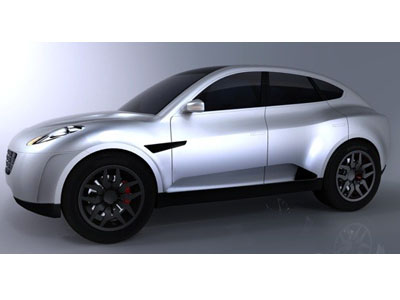
Velozzi Solo

Automobile hybrid technologies are accessible not only to the large companies like Toyota and General Motors, but also to small firms which, besides and have no experience of building of the car in general. But the automobile world promptly varies, and hybrid technologies become popular, so demand for such cars grows. While the big companies struggle with crisis, small represent the new models.

All are already familiar with autocompany Tesla and two models: Roadster and representation sedan Model S. Now one more new company tries to declare itself — Velozzi which is going to begin manufacture of hybrid cars loudly.

Velozzi the State of California — a place very successful for start of the hi-tech project is based in Los Angeles. We will remind, to California on emissions of exhaust gases the most rigid ecological standards are entered into environment.

In the young company there are scientists, engineers and designers who are engaged in working out of transport ecological technologies. The company purpose is the batch production and bulk selling of ecologically safe, powerful, beautiful and functional hybrid cars.

Today Velozzi shows the working out — crossover Solo. Unlike other hybrids is an easy and spacious car. The majority of modern electric and hybrid cars are under construction on the same a principle. As old kind cars with traditional petrol motors, using, by and large, the same design. The general director of new company Roberto Velozzi considers, that manufacture of new effective vehicles with use of out-of-date methods of building is impossible.

For effective, ecologically pure car it is necessary to use easy materials to improve the fuel expense, to reduce environmental contamination and to increase safety of passengers.
Velozzi now has developed modular technology with use of modern easy materials that allows engineers to think freely not adhering to technical restrictions traditional for automobile branch. Under statements of experts of the company the new technology allows to simplify assemblage of the car and to reduce industrial expenses. As a result, the end production will cost more cheaply, and in the car it will be possible to use more expensive and powerful engines.

Besides, cars Velozzi in the world will use for the first time high-strength hydrocarbon. At the heart of a new material carbon with cylindrical structure, so-called CNTs is used.

Velozzi mechanical durability of a material which on 40% is more effective, than used is necessary today, first of all. Besides hydrocarbon very easy also gives in to secondary processing.
Crossover Solo, will use still set of hi-tech decisions, including, come and from the Formula-1. But the principle of work of hybrid installation becomes the main feature of the car. For gymnastics of super condensers and lithium-ionic of batteries onboard Solo fuel microturbines will be used some.

That is cars Velozzi are the normal electromobiles which electromotors receive a food at the expense of a combination lithium-ionic of the battery and super condensers which, in turn, are charged from several onboard fuel microturbines or the usual city electric system.
Microturbines Velozzi can use fuel any kind, including, gasoline, diesel fuel, ethanol, biodiesel fuel and natural gas. If it is necessary, the car can work as a diesel engine-generator and to feed with the electric power the whole house with all house electrodevices.

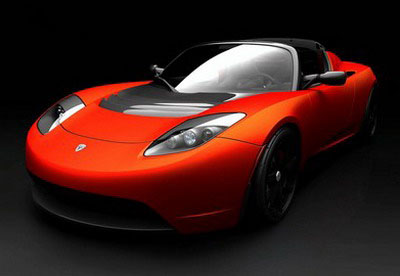
Tesla Roadster

By calculations, the car will be constructed only in 2011.

Solo it will be capable to reach speed in 210 km/hour, to be dispersed to hundred for fantastic for an off-road car of 6 seconds, and to spend 2,4 litres of fuel for 100 kilometres. Utopian for today figures, nevertheless, can define success of the new company in the future.

Except crossover Solo in plans at Velozzi building of the hybrid super car. For realisation of plans Velozzi already has now involved in working out of 17 future suppliers of components of the serial car.

Italians soon will show new generation Lancia Ypsilon

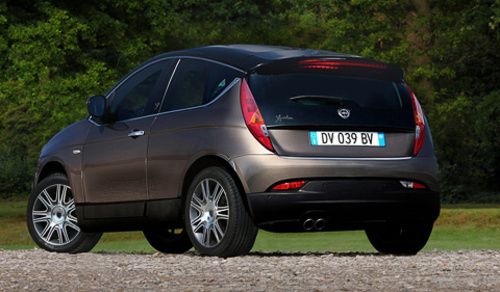
Lancia Ypsilon

The Italian mark Lancia widely popular in the past is in demand today basically in the local car market.

Muffled positioning, the narrow and illogically built lineup, the overestimated prices — all it has led to that in many countries have simply ceased to buy production Lancia. But Italians still hope to break a situation. Including thanks to new generation of small hatchback Ypsilon.

The car will be realised on platform Gamma which also use Fiat Grande Punto and Alfa Romeo MiTo. Certainly, Lancia will receive a corresponding stuffing: petrol motors 1.4 (78 and 95 forces), 1.4 T (120 and 150), diesel engines 1.3 JTD (90) and 1.6 JTD (120). In the chassis racks McPherson in front and braided a beam behind will be applied.

While it is not known, on which the motor-show debuts new generation Lancia Ypsilon. The premiere should be loud, after all the B-class hatchback is the most bought model of the company. Apparently, car presentation will date for a scale Frankfurt motor show. But it is our thoughts, and Italians — a question here is how will arrive.